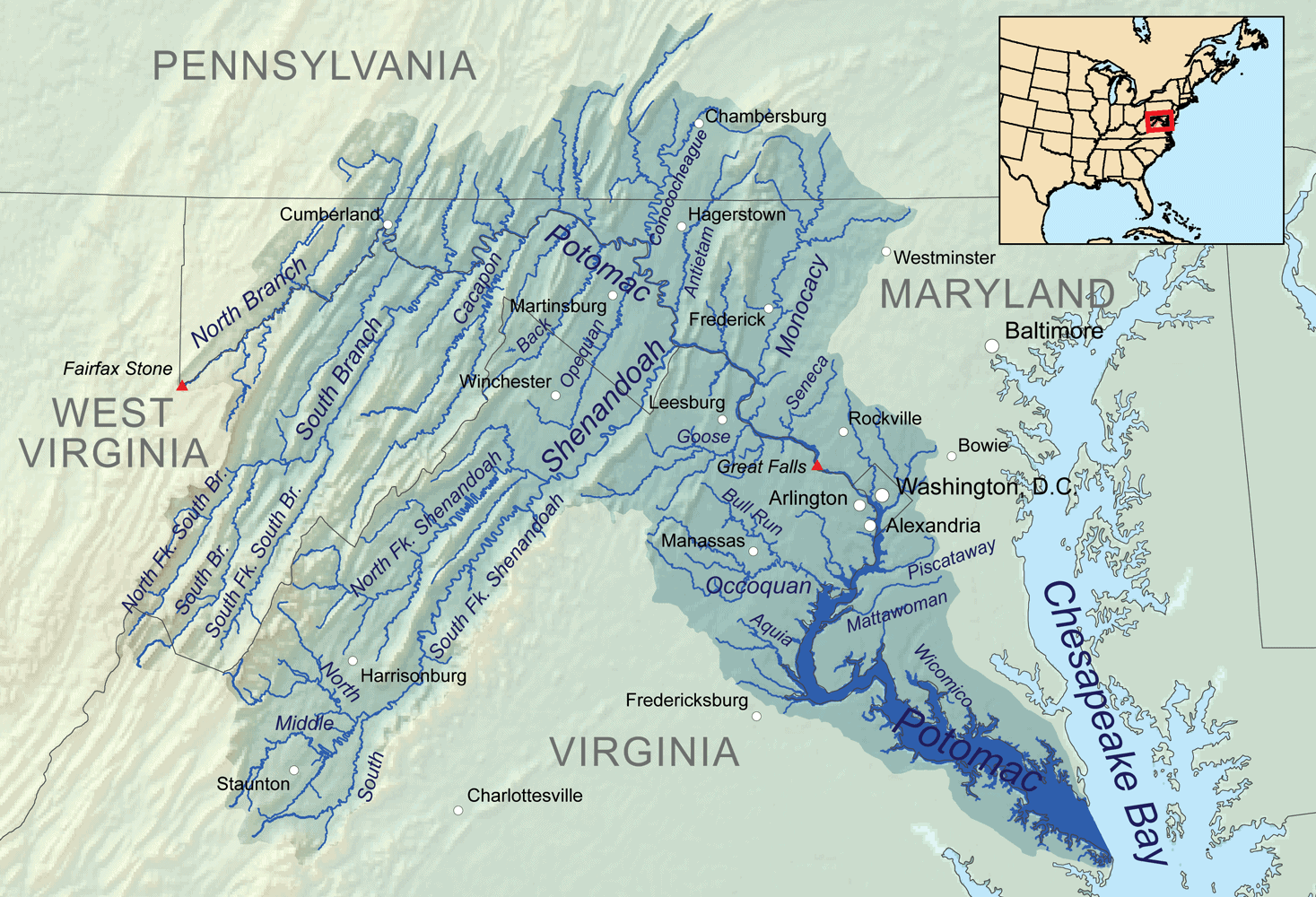
The Ochlockonee River originates in Georgia and flows 206 miles to Ochlockonee Bay. © DEP
Watershed Stats
Size of Basin: The two watersheds cover approximately 3,600 square miles of north Florida and south Georgia. The Ochlockonee watershed's total area is 2,416 square miles, with approximately 1,080 square miles in Florida. The Apalachee-St. Marks watershed drains 1,204 square miles.
Major Cities and Towns: Tallahassee, Woodville, Quincy, Bradfordville, Havana, Greensboro, Gretna, Monticello, Crawfordville, Sopchoppy, St. Marks, and Panacea
Counties: Leon and Wakulla Counties, significant parts of Gadsden and Jefferson Counties, and smaller parts of Liberty and Franklin Counties
Major Water Features: Ochlockonee River , Ocklawaha Creek, Bradwell Bay, Sopchoppy River, Ochlockonee Bay, St. Marks River, Wakulla River, St. Marks Spring, Wakulla Springs, Apalachee Bay, Munson Slough, Ames Sink, Spring Creek, Spring Creek Springs System, Lake Munson, Lake Jackson, Fred George Sink, Meginniss Arm Branch, Jackson Heights Branch, Lake Lafayette Chain of Lakes, and Lafayette Creek
Overview
Lake Talquin Reservoir is the watershed's largest lake. It is an impoundment of the Ochlockonee River built in 1929 for power generation. In fact, the lake hosts one of only two hydroelectric power plants in Florida. Today, Lake Talquin is a very popular fishing and recreation area. © DEP
The Ochlockonee River originates in Worth County, Georgia, and receives flow from innumerable tributaries along its 206-mile course southward to Ochlockonee Bay. Forty-five percent of the total watershed lies within Florida.
The main tributaries of the Ochlockonee River in Florida are Telogia Creek, Little River, and Sopchoppy River. Most of these rivers and streams are alluvial. River and stream flow is a combination of runoff from rainfall, ground water seepage, and springs.
Sopchoppy River is a blackwater stream that intersects with Ochlocknee River near the bay. © Alan Cressler
There are more than 300 lakes in the Ochlockonee watershed, totaling 24,261 acres. Karst features are more evident east of the Ochlockonee River, and many lakes in this area are formed in solution basins and swampy depressions. Lake Iamonia, one of the larger lakes in the region, is grass filled and contains only small, open water areas. It drains through sinkholes or empties during periods of drought. The lake has an intermittent connection to the Ochlockonee River and receives flows from the river during high water.
From the Florida-Georgia state line, the Ochlockonee River flows across northwestern Leon County and eastern Gadsden County before it reaches the Lake Talquin Reservoir, the area's largest lake. It is an impoundment of the Ochlockonee River built in 1929 for power generation; however, the lake has become more important for recreational purposes. Numerous fish camps and homes are located on the lake.
Sun sets on Ochlockonee Bay. © Russell Sparkman
Flows are tidally influenced in the Ochlockonee River near the coast, the Sopchoppy River, and Crooked River. The coastal area also contains coastal dune lakes, flatwood lakes, and river floodplain or oxbow lakes along the Ochlockonee River. Coastal dune lakes form from sand dunes that were once part of relict shorelines along coastal and near-coastal areas. An example is Tucker Lake, in the southern part of the Ochlockonee watershed in Franklin County. The region's flatwood areas contain numerous shallow ponds that form in poorly drained areas. Oxbow lakes form where river channel meanders become isolated over time. There are several notable oxbow lakes along the Ochlockonee River, such as Bone Bluff Lake, Silver Lake, and Red Lake.
Human Impacts
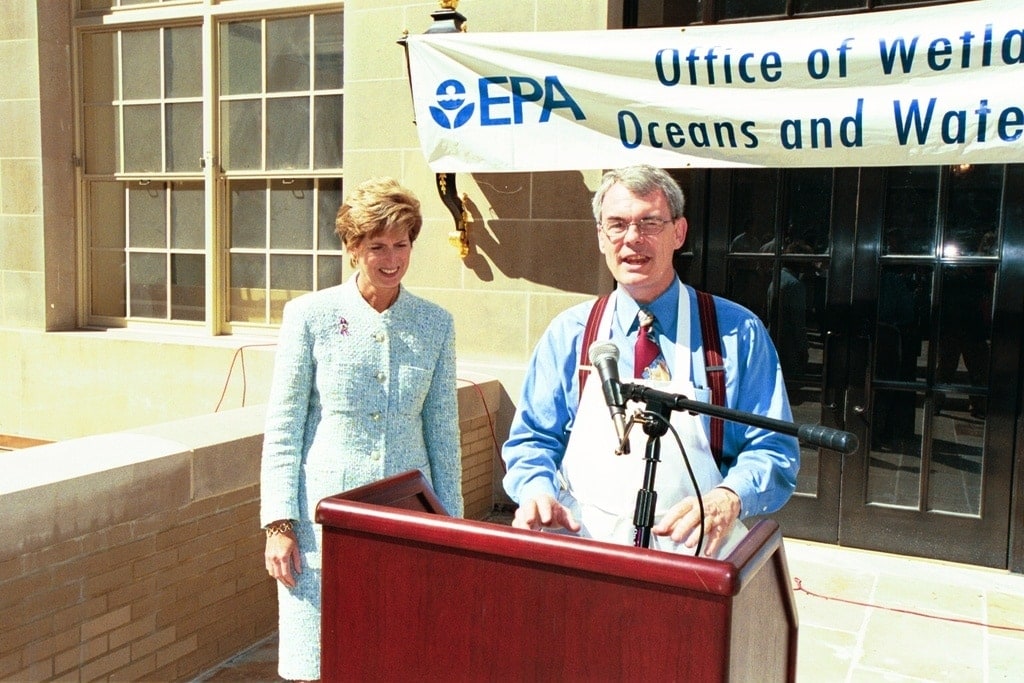
Pollutants in stormwater are major threats to lakes in the watershed including Lake Jackson. FDEP's Richard Drew explains the function of one such pond that intercepts and holds stormwater runoff just north of Tallahassee Mall before it flows to Lake Jackson. © Russell Sparkman
Lake Jackson, the area's most heavily used recreational lake, is threatened by the stormwater runoff it receives from roads, commercial areas, and residential subdivisions, including the interstate highway corridor (Interstate 10) and the city of Tallahassee. Algal blooms were common in portions of the lake by the late 1980s. Meginniss Arm, which receives the heaviest load of urban stormwater, contained sediments with detectable levels of petroleum hydrocarbons and heavy metals. Hydrilla, an invasive aquatic plant, dominates the eastern portion of the lake. Fish in Lake Jackson have shown a high incidence of disease. Benthic macroinvertebrate populations, which provide an indicator of the lake's biological health, are low in both number and species richness.
Stormwater pollution from development also threatens several smaller lakes in the area, most notably Lake Hall and Carr Lake. Blue-green algal blooms and aquatic weed problems persist.
Aquatic plant growth is a concern in Lake Iamonia. Accumulations of organic muck from decomposing aquatic vegetation have choked the lake, prompting the Fish and Wildlife Commission to initiate a project to remove muck and tussocks, which form mounds that choke open water areas.
In recognition of these impacts, FDEP, the Northwest Florida Water Management District (NWFWMD), and local governmental, scientific, educational, and citizen organizations are working to develop strategies for protecting and restoring water quality and quantity in the Ochlockonee Basin.
Interesting Facts:
- Lakes Jackson and Iamonia periodically drain through sinkholes.
- The baseflow of most of the streams in the Ochlockonee watershed is low compared with streams in other areas of northwestern Florida.
- Lake Talquin, created for power generation in 1929 by the construction of the Jackson Bluff Dam on the Ochlockonee River, is among the oldest of the large reservoirs in the state.
The Florida Department of Environmental Protection, Northwest Florida Water Management District, and local governmental, scientific, educational, and citizen organizations are working on numerous projects to restore and protect the Ochlockonee River and St. Marks River watersheds. The following are some of the major watershed restoration initiatives.
Watershed Restoration Program
The Florida Department of Environmental Protection has implemented a Watershed Restoration Program to identify "impaired" waters and develop plans to reduce that pollution in springs, rivers, lakes, and streams in the Ochlockonee-St. Marks watersheds.
Additional Information:
FDEP TMDL Program Website
FDEP Ochlockonee-St. Marks Assessment Report Website
Aquifer Protection Program
This city of Tallahassee program was established to protect wellheads, delineate high-recharge areas and areas most susceptible to ground water contamination, and identify contaminated areas. It is responsible for implementing the 1992 Aquifer Recharge/Wellhead Protection Ordinance.
Additional Information:
City of Tallahassee Aquifer Protection Program
Big Bend Seagrasses Aquatic Preserve
Established in 1985, the 945,000-acre preserve stretches along the whole of the Big Bend, from Wakulla County through Jefferson, Taylor, Dixie and Levy Counties. It consists mainly of a large, remote, and undeveloped expanse of tidal lands, islands, seagrass beds, shallow banks, and submerged bottoms extending nine miles into the Gulf of Mexico, as well as all natural waterways tidally connected to the preserve.
Additional Information:
FDEP Big Bend Seagrasses Aquatic Preserve Website
FDEP About the Big Bend Seagrasses Aquatic Preserve
FDEP Big Bend Seagrasses Aquatic Preserve Fact Sheet (PDF)
FDEP Big Bend Seagrasses Aquatic Preserve Management Plan (PDF)
Florida Springs Initiative
FDEP created this comprehensive springs protection effort in 2001 to implement the recommendations of the 2000 Florida Springs Task Force Report. The Florida Legislature provided $17.4 million from 2001 to 2006 to fund research, monitoring, education, and landowner assistance projects. Current funding is $2.4 million per year.
Additional Information:
Florida Springs Initiative Website
Florida Springs: Protecting Nature's Gems
FDEP Florida Springs Initiative 2007 Program Summary and Recommendations (PDF)
Florida Springs Task Force
In 1999, Governor Jeb Bush initiated the Florida Springs Initiative to help protect and restore the state's 600 springs. This included the formation of a multiagency Florida Springs Task Force chaired by FDEP to recommend strategies for protecting and restoring Florida's springs. Several important projects have been initiated to monitor and protect the springs of the St. Marks watershed.
Additional Information:
Florida Springs Task Force Website
Florida Springs Task Force 2000 Report (PDF)
Lake Jackson Aquatic Preserve
The Lake Jackson, Carr Lake, and Mallard Pond ecosystem is a valuable biological, aesthetic, and recreational resource. In 1974, the Florida Legislature designated this 4,700-acre area as an Aquatic Preserve to preserve and maintain its biological resources in their essentially natural condition.
Additional Information:
FDEP Lake Jackson Aquatic Preserve
Lake Jackson Restoration
Beginning in 1990, an interagency team-including the NWFWMD, FDEP, Florida Fish and Wildlife Conservation Commission, and Leon County-conducted several phases of a restoration effort after prolonged drought and sinkholes drained the lake and provided access.
Additional Information:
Florida Department of Natural Resources Lake Jackson Aquatic Preserve Management Plan
Lake Munson Restoration
Lake Munson, a 225-acre impoundment, receives stormwater from Tallahassee and provides floodwater equalization for areas downstream. Sediment and accumulated organic muck have choked the lake and blanketed the bottom. A number of restoration projects are currently under way.
Additional Information:
Leon County Lake Munson Restoration Website
Stormwater Management
In accordance with the 1990 Tallahassee-Leon County Comprehensive Plan, a stormwater ordinance and a stormwater utilities department were created. From the resulting Stormwater Master Plan, local planners developed a list of approximately 20 capital improvement projects to address flooding and drainage improvements. The city has constructed 11 regional facilities that incorporate water quality treatment and flood prevention into their design. Other activities include development guidelines, permitting requirements, stormwater retrofits, nonstructural stormwater practices, and lake restoration.
Additional Information:
City of Tallahassee Stormwater Website
Surface Water Improvement and Management (SWIM) Plans
A number of waterbodies in the Ochlockonee-St. Marks watershed are designated as SWIM priority waterbodies for protection and restoration. In the Ochlockonee watershed, these waters are the Ochlockonee River and Bay, Lake Iamonia, and Lake Jackson. The Lake Jackson SWIM Plan was submitted in 1990 and updated in 1994 and 1997. In the St. Marks watershed, the St. Marks River (including the Wakulla River and Apalachee Bay), Lake Munson, and Lake Miccosukee are SWIM waterbodies. A SWIM Plan was developed in 1997 for the St. Marks River, Wakulla River, and Apalachee Bay. The NWFWMD, which oversees the SWIM Program, is working with federal, state, and local government and the private sector to restore these damaged ecosystems, prevent pollution from runoff and other sources, and educate the public.
Additional Information:
NWFWMD SWIM Plan Website
City of Tallahassee-Water Reuse Facility
The recently opened the Tram Road Wastewater Reuse Facility is the first in the Tallahassee area to provide reclaimed or recycled wastewater for the irrigation of public areas, such as golf courses and roadsides. The facility will divert 1.2 million gallons of wastewater headed to the Southeast Farm Wastewater Reuse and Sprayfield daily and provide further treatment so that it can be reused for public irrigation. The Tram Road facility is part of a $200 million, multiyear commitment by the city of Tallahassee to further improve wastewater treatment and minimize impacts on ground water flowing to Wakulla Spring.
Additional Information:
Tram Road Wastewater Reuse Facility
Wakulla County Aquifer and Springs Protection
The Wakulla County Board of Commissioners has passed ordinances requiring the use of "performance-based septic systems." These systems reduce nitrogen, a byproduct of human waste and a major contributor to the deterioration of Florida springs. Such systems can cut levels as much as 70 percent. Other aquifer protection efforts include increasing development setbacks to prevent polluted stormwater from entering sinkholes in the county.
Additional Information:
Wakulla County Website
LIFE – Leon Sinks Geological Area
Started in 2006, the DEP, Nims Middle School in Leon County, the National Forest Service in Florida, and the University of Florida IFAS Extension (Wakulla and Leon Counties) are working together on field experiences at the Leon Sinks Geological Area and St. Marks National Wildlife Refuge. Approximately 60 sixth grade students and teachers explore such topics as karst features, seasonality, and plant classification. This Program received initial funding from a Hands on the Land (HOL) grant. HOL is a network of outdoor classrooms stretching from Alaska to Florida, and is sponsored by Partners in Resource Education, a collaboration of five Federal agencies, a non-profit foundation, schools, and other private sector partners.
Additional Information:
LIFE Program
Florida Friendly Landscaping Education
FDEP has supported educational efforts to encourage landscape maintenance companies and citizens to adopt Florida-friendly landscaping practices, which minimize the use of fertilizers and reduce water consumption.
Additional Information:
Florida-Friendly Landscaping Website